
A loading door in a coastal UAE warehouse lets in humid summer air every time it opens. An AC system can keep the space cool while moisture still collects on surfaces chilled by the AC, damages stock or makes the workplace feel damp. Gyms, office buildings and food storage facilities face similar challenges. A commercial dehumidifier is designed to handle the volume of air and the moisture load in these larger spaces.
In this article, we’ll explain how commercial dehumidifiers work, explore the signs that your business needs an upgrade from a domestic unit, discuss the benefits of using an industrial dehumidifier, and introduce the role of a commercial desiccant dehumidifier.
Why a Standard Dehumidifier Isn’t Always Enough
Residential dehumidifiers are great for homes and small offices. But when dealing with larger areas, higher volumes of air, or environments with extreme conditions, these units often fall short. Here are some common limitations of standard dehumidifiers in commercial settings:
- Limited capacity – They struggle to extract sufficient moisture in large areas.
- Insufficient airflow – Smaller fans can’t circulate air efficiently across wide or tall spaces.
- Shorter duty cycles – Residential models usually have a lighter duty rating. Matching the unit’s duty rating to the site’s workload helps limit premature wear.
- Drainage requirements – A hose drainage outlet carries collected water to a suitable drain and reduces the need to empty a tank.
Signs of Excess Humidity in Commercial Spaces
Before investing in a dehumidification solution, it’s important to identify the warning signs of excessive humidity. These include:
- Condensation on AC-cooled windows and walls or around AC grilles
- Warping wood, rusting metal, or mould growth
- A persistent musty smell
- Increased allergens and respiratory discomfort
- Equipment malfunction due to moisture
- Damp paperwork, stock or packaging damage
- Rising energy bills as the air conditioning and ventilation system works harder to remove moisture
Any of these could indicate that the current dehumidification method cannot keep up with the summer moisture load and that it’s time to consider an industrial dehumidifier.
How Do Commercial Dehumidifiers Work?
At the core, all dehumidifiers function by drawing in moist air, removing the water, and releasing drier air back into the environment. What makes commercial dehumidifiers different is their efficiency, durability, and specialised technology for large-scale moisture control.
The Basic Process:
-
Air Intake: A powerful fan pulls humid air into the unit.
-
Moisture Extraction: In a refrigerant-based unit, the air passes over cooled coils, condensing moisture into water. In a commercial desiccant dehumidifier, air flows through a rotor coated with a moisture-absorbing substance (desiccant), such as silica gel.
-
Water Removal: In a refrigerant unit, condensed water collects in a tank or flows out through a drain hose. A desiccant system removes moisture from the wheel using a separate stream of heated air.
-
Air Reheating and Discharge: The now-dry air is reheated and expelled back into the room.
As the cycle repeats, it lowers humidity across the space. The equipment needs to match the size of the space and the amount of moisture coming in.

Commercial Compressor vs. Commercial Desiccant Dehumidifiers
When selecting a commercial dehumidifier, it’s important to choose the right type based on your environment. Two primary types are:
1. Refrigerant Compressor Dehumidifiers
- Work best in temperatures above 15°C
- Suitable for warehouses, gyms, and retail stores
- Efficient in warm, humid settings such as warehouses during a Gulf summer
2. Commercial Desiccant Dehumidifier
- Suited to chilled areas below 10°C
- Used in cold storage, refrigerated facilities and chilled service areas
- More effective in drying air in extreme or fluctuating temperatures
The rotating desiccant wheel can still remove moisture from chilled air in refrigerated facilities, where a compressor model may lose performance. Desiccant models usually cost more, but can offer more consistent performance in some commercial settings.
Benefits of Using a Commercial Dehumidifier
Investing in an industrial dehumidifier offers numerous advantages beyond just moisture removal:
- Protects Inventory: Helps prevent spoilage, mould and damage to materials such as paper, textiles and electronics.
- Preserves Structural Integrity: Helps limit corrosion, wood rot and warping in building materials.
- Improves Air Quality: Controls the damp conditions that encourage mould and musty odours, helping reduce exposure to mould-related allergens.
- Energy Efficient: Can reduce the amount of moisture the air conditioning system has to remove. Whole-site energy use depends on how the equipment is sized and set up.
- Boosts Productivity: Creates a more comfortable and healthier workspace for staff and customers.
Choosing a Dehumidifier for Your Space
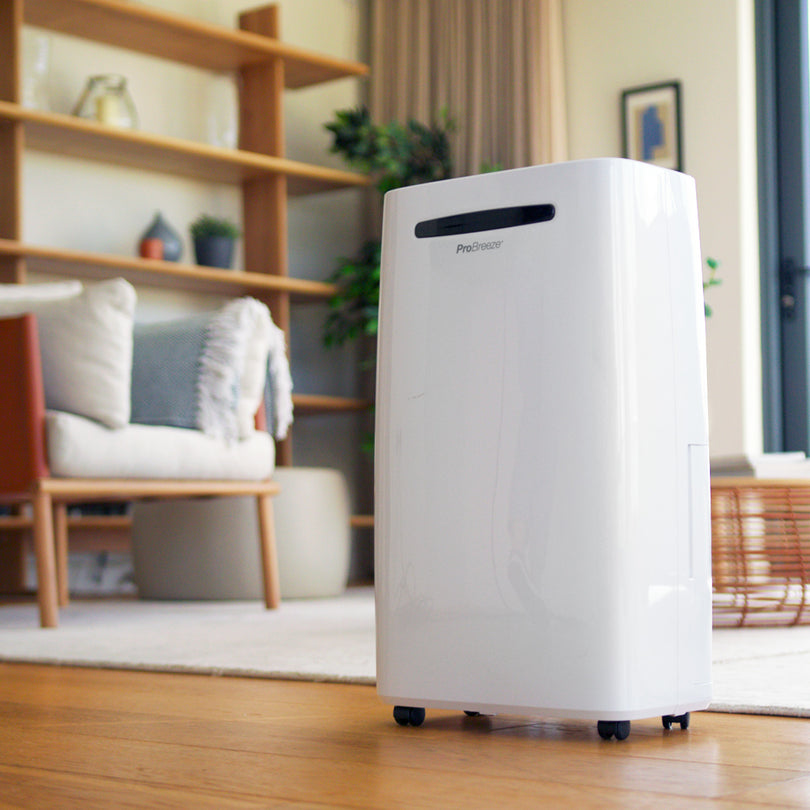
For a smaller office or staff room, compare the Pro Breeze OmniDry 40L, rated for up to 50 m². For a warehouse, workshop or production floor, ask a commercial supplier or building-services contractor to size equipment for your site. Compare features such as:
- Rated daily extraction capacity matched to the moisture load
- Continuous drainage systems
- Digital humidistats and timers
- Auto-defrost for low-temperature operation
- Robust wheels and handles for equipment that needs to move between areas
- Durable construction, such as stainless steel, for demanding environments
For smaller spaces, compare specifications in our dehumidifier range. For home use, start with our 13-step guide to buying a dehumidifier or see how different dehumidifiers work to compare options for spaces kept unusually cool by AC.
Conclusion
Understanding how commercial dehumidifiers work helps you protect your business from the hidden costs of excess moisture. If a standard unit cannot keep up, an industrial dehumidifier can make a substantial difference. For a refrigerated facility, consider a commercial desiccant system.
Protecting equipment, stock and indoor air quality starts with choosing a solution sized for the space. Check where the moisture is coming from and how the air conditioning and ventilation handle it before settling on a unit.

OmniDry 40L Quiet Low Energy Dehumidifier with Laundry Mode and Smart App Control
AED 1,049.00
View product