The quick answer
- Do moisture absorbers work? Yes, in small, enclosed spaces: wardrobes, cupboards, under sinks, small bathrooms and camping trailers put away for the summer.
- But they’re slow: an Osmo® collects up to 1.3 litres over weeks. A 12-litre dehumidifier can remove up to 12 litres a day.
- Choose an absorber for a small space with no plug, where silence matters and dampness is mild.
- Choose a dehumidifier for condensation, mould, drying washing or any whole room.
- See which to buy.

During a humid summer in a coastal UAE apartment or villa, the first signs of excess moisture may be a musty wardrobe or droplets where warm, humid air meets window glass cooled by the AC. Left unchecked, moisture can lead to black mould, mildew, peeling paint and damaged furniture. Both a moisture absorber and a dehumidifier pull water from the air. The right choice depends on whether the damp is in a cupboard or across a room.
1Moisture absorber vs dehumidifier at a glance
Both take moisture out of the air, but on very different scales. The question is how much water you need to remove, and from how big a space.
| Moisture absorber | Mini dehumidifier | Compressor dehumidifier | |
|---|---|---|---|
| Example | Osmo® | 1500ml Mini | OmniDry 12L |
| Water removed | Up to 1.3 L over weeks | Up to 0.5 L a day | Up to 12 L a day |
| Needs electricity? | No | Yes, 40 W | Yes, 200 W |
| Noise | Silent | 40 dB | 36 dB |
| Humidity control | No | No | Yes |
| Best for | Cupboards, wardrobes | Small rooms | Bedrooms, living rooms |
Extraction figures are maximum ratings measured in test conditions; results vary with room temperature and humidity. Source: Pro Breeze product specifications.
2How moisture absorbers work
Moisture absorbers (sometimes called non-electric or disposable dehumidifiers) contain crystals or a tablet of a salt such as calcium chloride, which draws water out of the air. The salt slowly dissolves into the water it collects, which drips into a tank below. Compact, portable and easy to use, these little heroes are simple but effective, whether you need everyday protection at home or a travel-friendly option.
- No electricity, no noise
- Cheap to buy and cost-effective for small areas
- Portable and easy to place: fits almost anywhere
- Good for spaces you can’t plug into
- Removes far less water than a dehumidifier
- Can’t be set to a target humidity
- Tablets or crystals need replacing

Disposable or refillable?
Disposable absorbers use moisture-absorbing crystals in a bag or sealed tub, which dissolve into liquid as they work. They’re handy for very tight spaces like under the sink or inside shoe cabinets, but they fill up quickly and need frequent replacing, which makes them less eco-friendly and can cost more over time.
Refillable absorbers like Osmo® keep the container and you swap only the tablet: the 700 g tablet dissolves in 20–30 days and the salty water keeps absorbing for up to around 100 days, depending on the room. Once the tank reaches the “full” line, empty it and drop in a new refill tablet. Bonus: Osmo® looks stylish and discreet, in a choice of colours, so unlike traditional moisture traps you won’t want to hide it when guests visit. It’s a more eco-conscious and economical choice for long-term moisture control.
3How dehumidifiers work
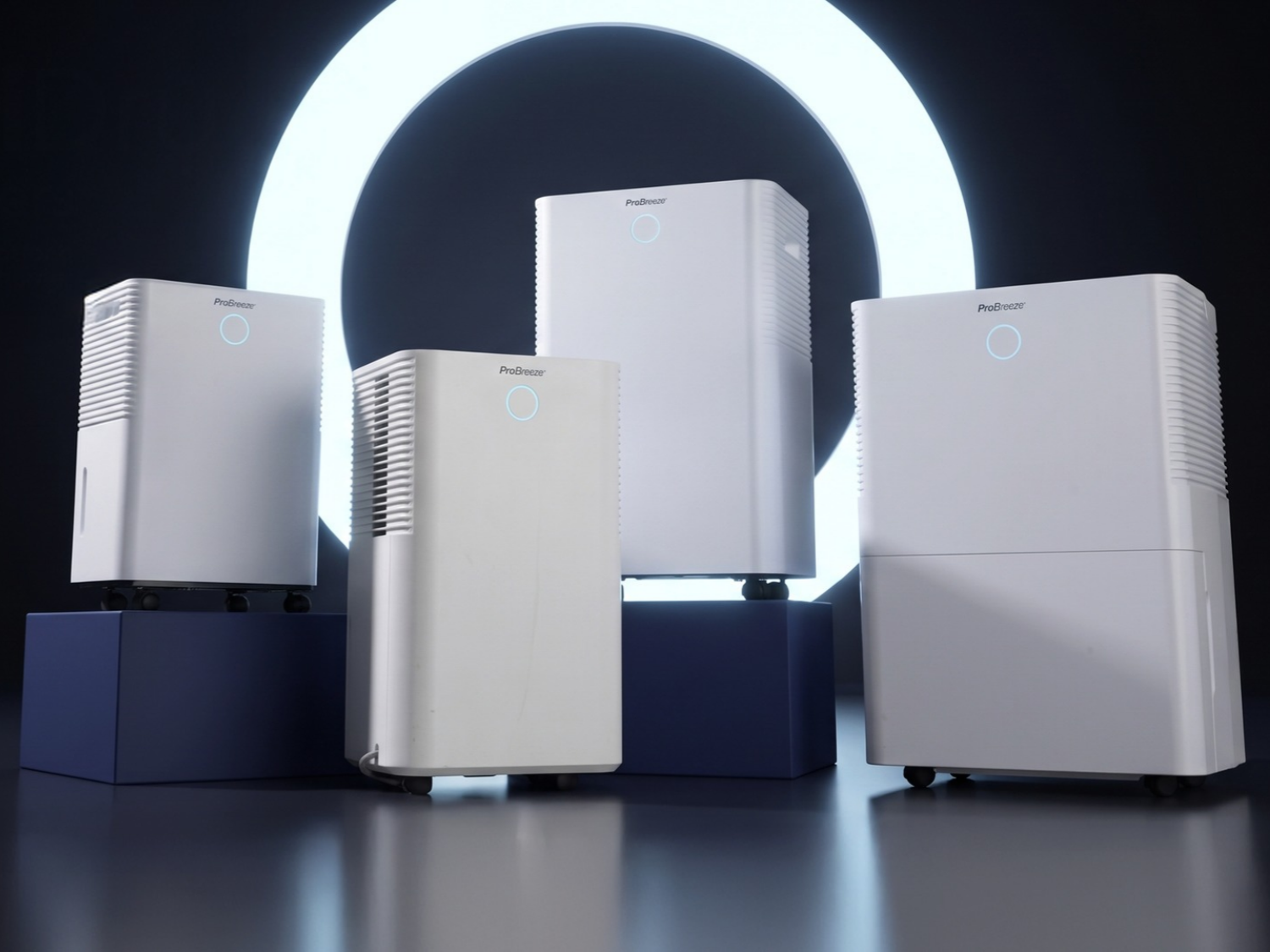
A dehumidifier is an electric appliance that draws room air through the machine and collects the moisture in a tank. They come in many sizes, making them powerful moisture removers for persistent damp in living rooms, bedrooms, home offices, laundry rooms, storerooms and whole apartments. There are three main types:
- Compressor: the powerhouses. Cold coils condense water, like a fridge. Great for medium to large rooms and consistently humid rooms above about 15°C, including many AC-cooled homes. Many have automatic humidity control, traffic-light humidity indicators, LED screens and Wi-Fi app control.
- Desiccant: a heated absorbent wheel that works well even at lower temperatures. These units tend to be lighter than compressor models and can be useful in rooms kept unusually cool by air conditioning. These are known as desiccant dehumidifiers.
- Peltier (mini): also called thermo-electric. A small solid-state cold plate with no compressor, so they’re compact, lightweight, very quiet and low-maintenance. Perfect for desktops, wardrobes and small bedrooms.
Most compressor models have a humidistat: set a target such as 50% and they switch themselves on and off. The OmniDry 12L is one option for humidity control. If airborne dust is also a concern, a separate HEPA purifier can handle that job.

For a full walk-through of sizes and features, read our 13-step guide to buying a dehumidifier.
4Costs compared
A moisture absorber uses no electricity, and the ongoing cost is replacing its tablet: an Osmo® refill tablet lasts up to around 100 days. Dehumidifiers cost more to buy and use electricity, but remove far more water for the money once you need more than a cupboard’s worth.
Hourly estimates use the units’ rated power and DEWA’s November 2026 residential first-slab rate in Dubai: 23 fils plus a 6 fils fuel surcharge, or AED 0.29 per kWh before VAT. Rates differ by emirate and monthly usage slab.
5Which works best in each room?
| Space | Best choice |
|---|---|
| Wardrobe, cupboard, under the sink | Moisture absorber |
| Small bathroom, shoe cabinet, boat or camping trailer in summer storage | Moisture absorber |
| Small bedroom with mild condensation | Mini dehumidifier |
| Bedrooms and living rooms with mould or condensation | Compressor dehumidifier |
| Drying washing indoors | Compressor dehumidifier |
| Humid storeroom or enclosed utility area | Compressor dehumidifier for room-wide damp |
6Which should you buy?

When the tank reaches the fill line, empty it and replace the tablet. See our Osmo® moisture absorbers. Or compare every model on our dehumidifiers page.
7Frequently asked questions
Do moisture absorbers stop damp smells?
In wardrobes, cupboards and shoe cabinets they help keep things dry, which helps stop musty odours from building up. A scented refill can also add a fresh fragrance.
Do moisture absorbers actually work?
Yes. They genuinely pull water from the air, and you can see it collect in the tank. They work best in small, enclosed spaces. In a whole room they can’t keep up with the moisture from breathing, cooking, showering and drying clothes.
Are non-electric dehumidifiers any good?
“Non-electric dehumidifier” usually means a moisture absorber. They’re silent, cost nothing to run and are great for cupboards, wardrobes, camping trailers in summer storage and other small spaces. For a whole damp room, pair them with an electric dehumidifier.
Is a moisture absorber the same as a dehumidifier?
Both reduce humidity, but a dehumidifier is an electric appliance that removes far more water and can hold a set humidity. An absorber is passive and much slower.
Will a moisture absorber stop mould?
In a cupboard or wardrobe it can help prevent mould from forming. Mould on walls or ceilings is a sign of a room-wide problem that needs a dehumidifier and better ventilation; clean existing mould off first.
Choosing between a moisture absorber and a dehumidifier comes down to your space. For small, enclosed spaces with mild damp, a moisture absorber is a convenient, cost-effective solution. For larger areas or persistent damp, a dehumidifier gives you more power and control. Explore our moisture absorbers and dehumidifiers to find the perfect fit, and see our guide to managing condensation and mould for more help.