The quick answer
- Will a dehumidifier stop condensation? Yes. By pulling excess moisture out of the air, a dehumidifier lowers indoor humidity, so less water collects on AC-cooled windows and around AC vents.
- Will it get rid of mould? It helps prevent mould and stops it coming back by keeping the air dry. Clean off any existing mould first.
- Aim for 30–50% indoor humidity, close doors, and place the dehumidifier near the worst windows.
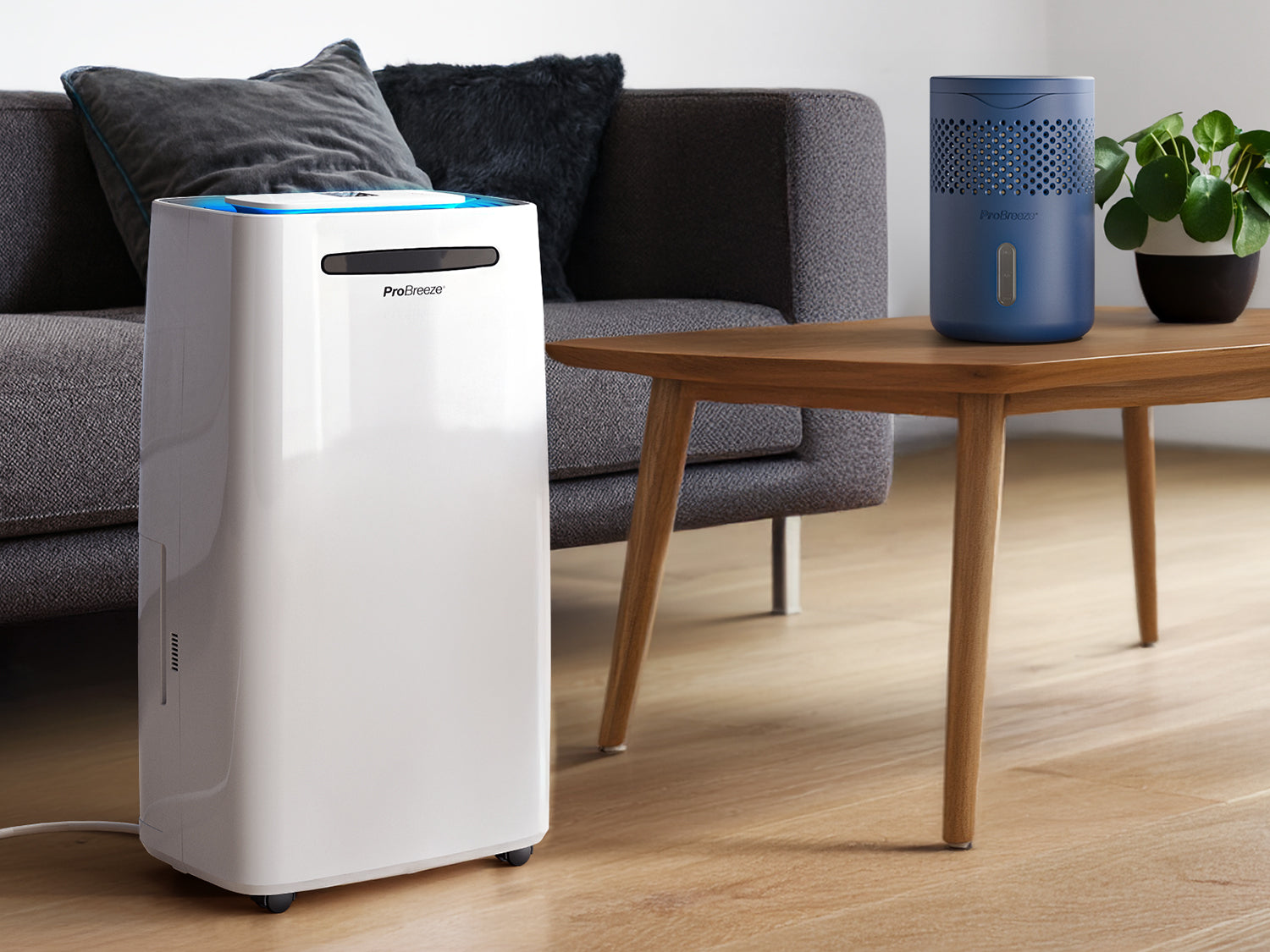
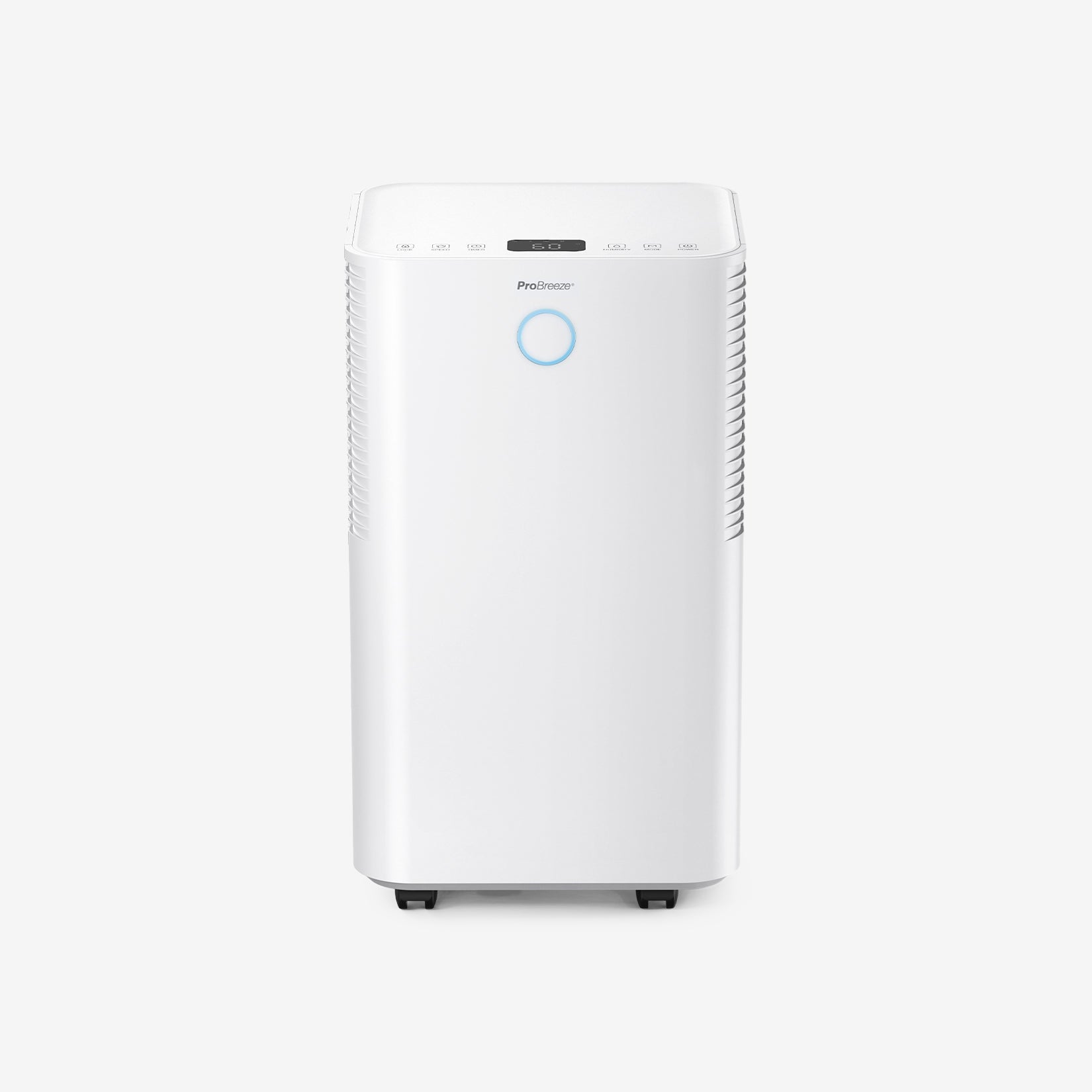
- Pick the right size: up to 20 m² → OmniDry 12L; up to 30 m² → OmniDry 20L; up to 50 m² → OmniDry 40L.
- See the room-by-room plan.

Water beading on the windows, black spots along the bathroom sealant or a musty smell behind the wardrobe can all point to excess moisture. In an AC-cooled apartment or villa, humid coastal air can condense as soon as it meets a surface cooled by the AC. The good news is that a dehumidifier for condensation and mould is one of the simplest, cheapest ways to take control. This guide explains what really works, where to put your dehumidifier, the humidity level to aim for and exactly which size suits each room in your home.
1Will a dehumidifier stop condensation?
When humid air comes in from outdoors or builds up from cooking, showers and breathing, moisture can settle on glass, walls and AC grilles. A compressor dehumidifier draws in the damp air, condenses the water onto cold coils and collects it in a tank. Set a target humidity and it switches itself on and off to hold it, helping keep the sill dry.
Our OmniDry range removes 12–40 litres of moisture a day at maximum rating, depending on the model, so it tackles condensation at the source rather than just mopping up after it.
2Does a dehumidifier get rid of mould?
A dehumidifier is your best long-term defence against mould. Mould needs damp to grow, and a dehumidifier takes that damp away. Keeping indoor humidity at 30–50% helps make it harder for mould to grow back after cleaning. Pay particular attention to AC-cooled surfaces where moisture can still collect.
What a dehumidifier won’t do is remove mould that’s already there, so start with a clean slate:
- Clean existing mould from sealant, window frames and walls with a suitable mould remover, following the product instructions.
- Fix the source if there’s a leak, rising damp or a broken extractor fan. A dehumidifier deals with moisture in the air, not water coming through the walls.
- Keep humidity in check. A dehumidifier’s humidity control cycles extraction to maintain your chosen level and help prevent mould from returning.
Many of our customers with asthma, allergies or eczema tell us they notice the difference once their home is drier and fresher. The World Health Organization links damp and mould with respiratory symptoms, allergies and asthma. Children and people with asthma can be particularly susceptible. Keeping humidity under control is one of the easiest steps you can take.
3What causes condensation and mould in UAE homes?
Condensation forms when humid air meets a surface cooled by the AC. In a coastal apartment in Dubai, Abu Dhabi or Sharjah during the humid summer months, check AC-cooled window frames, AC grilles, wall corners and the backs of wardrobes where air tends to sit still. Moisture can come from indoors or enter through doors and windows. Water on the outside of AC-cooled glass comes from outdoor air and is separate from the indoor damp a dehumidifier can control.
- Drying washing indoors. A single load can release litres of water into the air. Read our guide to drying clothes indoors with a dehumidifier.
- Cooking and kettles, especially without lids or an extractor.
- Showers and baths in bathrooms without a working fan.
- Breathing overnight in closed, AC-cooled bedrooms, where moisture can settle on window frames and other chilled surfaces.
- Cold AC-cooled surfaces such as grilles, ducts and nearby walls, especially when humid outdoor air flows in.

4What humidity should I set my dehumidifier to?
Aim for 30–50% indoors. If the reading is regularly above 50%, check AC-cooled surfaces and poorly ventilated corners for signs of moisture. Our dehumidifiers with automatic humidity control hold your room at the level you set. Use this as a quick guide to what your readings mean:
| Room humidity | What it means | What to do |
|---|---|---|
| Below 30% | Too dry | Turn the dehumidifier off or raise its target. Very dry air can irritate skin and sinuses; see the benefits of a humidifier. |
| 30–50% | Ideal | Set your dehumidifier to hold it in this range. |
| 50–60% | Watch for damp spots | Switch your dehumidifier on and set it to 50% or below. |
| 60–70% | High condensation risk | Set the dehumidifier to your target humidity and use extractor fans when cooking and showering. |
| Above 70% | High mould risk | Check for leaks, rising damp or AC drainage problems. A model with a drainage outlet can channel collected water directly to a suitable drain. |
AC-cooled windows and walls can still get wet below these levels, so keep the dehumidifier near them. The OmniDry 12L, 20L and 40L all show the room’s current humidity on their display, so check it at the same time each day for a week to see the difference.
5Where to put a dehumidifier for condensation
- Start in the worst room, usually the bedroom or wherever washing dries.
- Place it near the wettest window, but leave space around it so air flows freely in and out.
- Keep it out of curtains and away from furniture pressed against walls.
- Keep AC grilles clear so air can circulate. If a grille keeps dripping, ask maintenance to check the duct insulation and condensate drain.
- Close the right doors. For one problem room, close its door. For connected rooms, keep the internal doors between them open and keep external windows and doors closed while dehumidifying; keep designed background ventilation clear.
- Use continuous drainage if the tank fills too often. Many of the larger models have a continuous-drainage outlet. Check your model’s manual for the hose setup.
6How much water should a dehumidifier collect?
The amount collected changes with the weather and how damp your home is; the litres-per-day rating is the maximum. In the first few days a dehumidifier often fills its tank faster than you expect, because it’s pulling moisture out of the walls, carpets and soft furnishings as well as the air. That is a good sign: it shows how much damp was there. Once the room reaches your target humidity the machine cycles off more often and collection slows down.
Extraction figures are maximum ratings from Pro Breeze product specifications. Hourly cost at rated power using AED 0.29/kWh before VAT (DEWA’s first residential slab of 23 fils plus the November 2026 fuel surcharge of 6 fils per kWh). Your rate varies by emirate and monthly usage slab. Want the full picture? See how much a dehumidifier costs to run.
7Room-by-room plan
Match the dehumidifier to the space. If a room is very damp, or you also dry washing there, go one size up.
Bedrooms
Moisture can build up in a closed bedroom and settle on AC-cooled windows or behind wardrobes. The 12L Compact is a good fit where floor space is tight. For a quiet option, the OmniDry 12L covers up to 20 m² at just 36 dB. See all dehumidifiers for bedrooms.
Bathrooms
Showers create bursts of steam that fog mirrors and leave mould in the grout and sealant. Run your extractor fan, then let a compact dehumidifier finish the job. The 12L Compact handles up to 20 m² in a small footprint. Browse the full dehumidifier range.
Living rooms, apartments and villas
For open-plan living spaces, an apartment or the main floor of a villa, choose more capacity. The OmniDry 20L covers up to 30 m² and doubles as a laundry dryer, while the OmniDry 40L handles up to 50 m² for the dampest homes.
Storerooms and enclosed utility rooms
If a storeroom or utility room is kept particularly cool by the AC, check the temperature against the operating range of a compressor dehumidifier. Compressor models extract less moisture in cooler air. Our guide to the types of dehumidifiers and how they work explains the difference.
Wardrobes, cupboards and stored caravans
Small enclosed spaces where air doesn’t circulate need a small solution: the 1500ml Mini Dehumidifier or an electricity-free Osmo® moisture absorber. For caravans and motorhomes, compare compact dehumidifiers.
| Space | Room size | Our pick |
|---|---|---|
| Small bedroom, box room | Up to 20 m² | OmniDry 12L |
| Double bedroom, bathroom | Up to 20 m² | OmniDry 12L or 12L Compact |
| Living room, flat, laundry | Up to 30 m² | OmniDry 20L |
| Large or very damp home | Up to 50 m² | OmniDry 40L or 30L Max Extraction |
| Storeroom, utility room | Varies with the space | Compressor model sized to the room and its temperature |
| Wardrobe, cupboard, caravan | Small spaces | Mini range or Osmo® |
Room sizes from Pro Breeze product specifications. Still unsure? Our 13-step guide to buying a dehumidifier walks you through every choice.
8Condensation absorbers, damp traps and tablets vs a dehumidifier
Condensation absorbers, damp traps, tablets and bags all use moisture-hungry salts to draw water from the air, with no plug and no noise. They are brilliant for wardrobes, cupboards, under sinks and caravans in storage. For a whole room with wet windows or mould on the walls, though, an electric dehumidifier removes far more water and can hold a set humidity. Many homes use both: a dehumidifier in the main living space and absorbers in the tight spots. Compare them in detail in moisture absorbers vs dehumidifiers.
9Other quick fixes that help
- Run extractor fans while cooking and showering, and for a while afterwards.
- Air the room when it’s drier outside. On humid or dusty days, use your extractor fans and regular ventilation instead.
- Put lids on pans and close the kitchen and bathroom doors.
- Wipe windows first thing, before the water soaks into frames and sealant.
- Check the AC if condensation keeps forming around grilles or ducts. Building maintenance can check the drain and insulation.
- Leave a gap between furniture and external walls so air can circulate.
For more on tackling damp, read our guide to treating and preventing damp.
10Best Pro Breeze dehumidifiers for condensation and mould

OmniDry 40L Quiet Low Energy Dehumidifier with Laundry Mode and Smart App Control
AED 1,049.00
View productCompare every model, with a size guide, on our dehumidifiers page.
11Frequently asked questions
How long does a dehumidifier take to stop condensation?
You’ll usually see a difference within the first few days, once the machine has pulled the built-up moisture out of the room and its furnishings. After that, automatic humidity control can help keep windows clearer by maintaining your chosen humidity level.
How does the humidity setting work in a bedroom?
The OmniDry 12L is rated at 36 dB. Its humidity control cycles moisture extraction around your chosen target, and the unit stops when its tank is full. Follow the instructions in your product’s manual.
What size dehumidifier do I need for a three-bedroom apartment or villa?
Choose by the area you need to treat, not bedroom count alone. The OmniDry 20L is rated up to 30 m² and the OmniDry 40L up to 50 m². For separate damp rooms or floors, treat each problem area rather than assuming one unit covers the whole house.
Will a dehumidifier help with damp walls?
It helps walls dry out when the damp comes from condensation on AC-cooled surfaces. If damp comes from a leak, rising damp or penetrating rain, fix the source first, then use the dehumidifier to help the room dry out.
I rent. What can I do about condensation and mould?
Ventilate when cooking and bathing, dry washing on a rack in a room with a dehumidifier, and keep humidity at 30–50%. Report damp, mould or leaks to your landlord in writing as soon as you notice them. For recurring damp, ask your landlord or building manager to look for the underlying cause.
With the right size dehumidifier in the right spot, set to 30–50%, you can keep windows clearer, walls drier and your home fresher through humid weather. Explore our full range of dehumidifiers, and find more advice on the Pro Breeze guide to treating damp.