The quick answer
- Fine beads on the outside of a cold grille: humid room air may be condensing on the metal. Wipe it dry and see where the moisture returns.
- Water coming through a vent or from the indoor unit: switch the AC off if you can safely reach a dry control. Contact building maintenance or an AC technician.
- Room still clammy after the cause is fixed: check indoor humidity. A dehumidifier can help with excess moisture in room air.

Is your AC dripping water inside on a humid UAE afternoon? Start by looking at where the water appears. A few beads on the face of a cold vent tell a different story from a steady drip through the grille or a widening stain on the ceiling. A photograph and a humidity reading can help you explain what you noticed. If the water is actively dripping or near electrics, deal with that first.
1. AC dripping water inside? Find where the drip starts
Start from where you can see clearly from the floor. With a wall-mounted split unit, look below the casing and along the wall. With ducted AC, look at the grille and the ceiling around it. If the floor is dry and the grille is easy to reach, wipe away light surface beads and check where they reappear. Use these clues to decide whom to call.
| What you see | What it suggests | Next step |
|---|---|---|
| Small beads across the face of a cold grille | Surface condensation is likely, especially if other cold surfaces are damp. | Check room humidity and note when it happens. |
| Repeated drops from inside one grille or under a split unit | Water may be escaping from the drainage system or forming behind the grille. | Switch the unit off safely and contact maintenance. |
| A spreading stain, softened paint or a bulge around the vent | Water may be collecting above the ceiling or coming from nearby pipework. | Keep clear of the area and report it urgently. |
In an apartment, a stain beside a vent can also come from plumbing or the apartment above. Tell maintenance where the stain started and whether it grows when the AC is off. That information helps them choose what to inspect first.
2. Why AC vents get condensation in UAE homes
Picture a glass of iced water on the kitchen counter. Water beads on the outside when humid air touches the cold glass. The same thing can happen when summer air from a balcony or corridor meets a metal vent cooled by the AC. This is especially noticeable when the room feels sticky even though the AC has brought the temperature down.
There is also a second place where water forms. Inside the unit, air passing over the cold coil gives up some moisture. A tray catches that water and a drain carries it away. An obstruction, a damaged tray or a drainage problem can send water into the room. With ducted systems, a technician may also need to check duct insulation and joints, especially if the same grille keeps getting wet.
Look at the indoor side of nearby windows and glass doors. Beads on several cold surfaces point towards moist room air. On a humid day, beads on the outdoor side of balcony glass tell you about the air outside. For condensation around the home, see our guide to condensation and mould.
3. What you can check safely
- Locate the first wet spot. A photograph taken from a dry place helps show whether droplets start at the face of the grille, the unit casing or the ceiling edge.
- Write down when it happens. Note the room, how long the AC had been on, whether a nearby door or window was open and whether the wet spot is growing.
- Measure the room air if the problem looks like surface condensation. Put a small humidity meter, also called a hygrometer, away from the vent, direct sun and wet surfaces. Take a few readings at different times so you can spot a pattern.
- Keep the inspection external. Leave access panels, ceiling grilles, electrical parts and drain lines to building maintenance or an AC technician.
If water reaches a light fitting, socket or switch, stay clear of the wet area and contact building maintenance urgently. If the ceiling is bulging, keep people away from the area below it.
4. What to ask building maintenance to check
For water that drips from inside a vent or the bottom of a split unit, start with a maintenance request. Include the photo, the location, when the drip started and whether the stain is changing. If you rent, share the same information with your building team or landlord through your usual reporting channel.
Ask them to check the condensate tray and drain. For a wet ceiling grille, add a request to inspect the nearby duct insulation and joints. If the damp patch spreads while the AC is off, ask them to rule out a plumbing or building leak as well. Once the cause is fixed, dry accessible wet surfaces and tell maintenance about any materials that remain wet. Our guide to treating damp explains what different kinds of damp patch can tell you.
5. When a dehumidifier can help
Consider a dehumidifier if there is no active leak and your humidity meter still shows high readings in the room. It takes excess water vapour out of the air. That means less moisture is available to bead on cold surfaces. For example, a spare room can feel clammy after the balcony door has been open on a humid day, even when every drain is working properly. In that situation, room humidity is the part a dehumidifier can address.
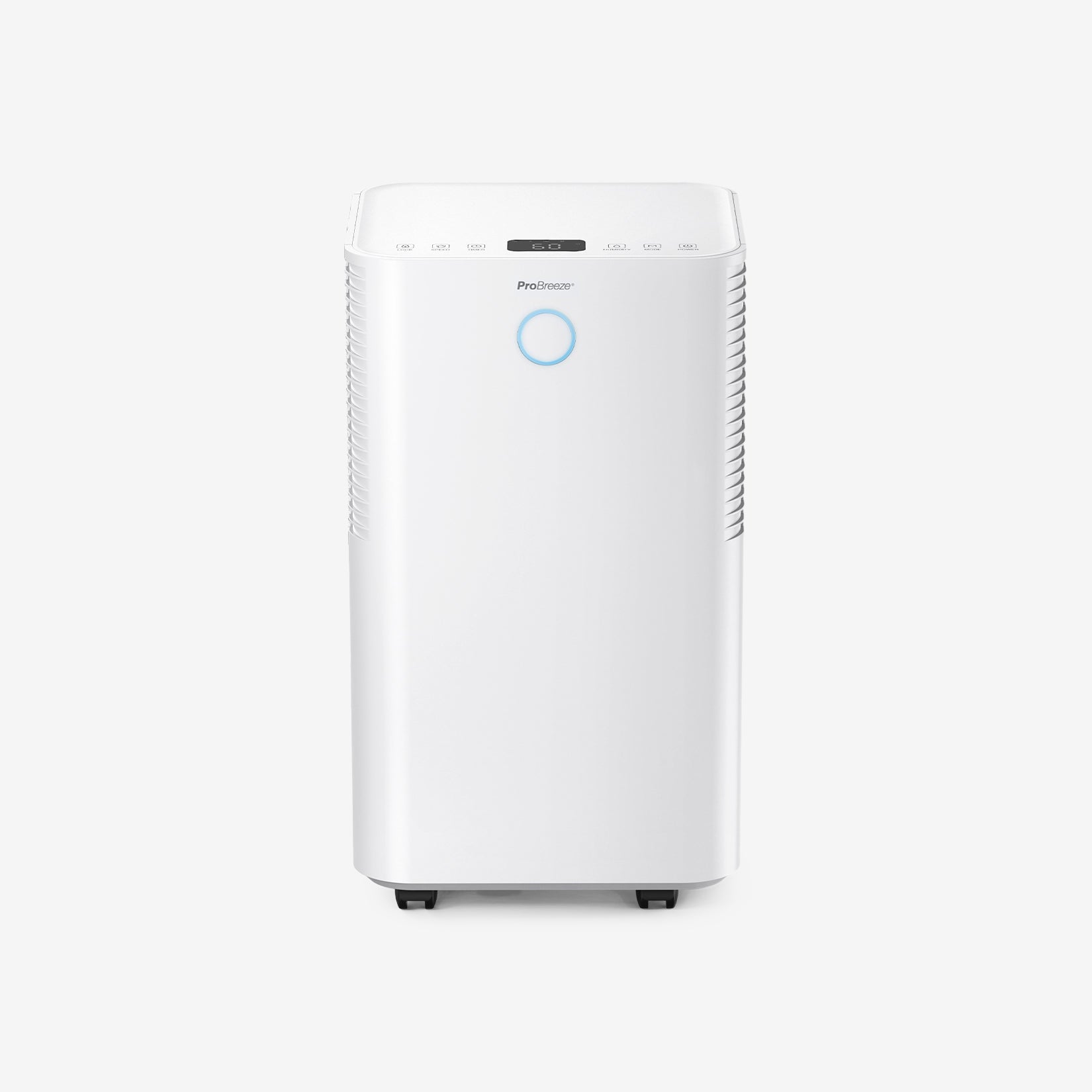
The Pro Breeze OmniDry 12L is one room-sized option to compare. Its built-in humidity control measures room air and adjusts extraction as needed. Keep the moisture source in mind and check the meter again after the room has had time to dry. Use our dehumidifier buying guide to choose a size for your space. Follow the instructions in your product’s manual.
6. Frequently asked questions
Why does the AC vent drip in only one room?
That room may be more humid, or there may be an issue with that grille, duct or the unit serving the room. If the drip comes through the opening or keeps returning in the same spot, ask maintenance to investigate.
Can I use a dehumidifier before the AC is fixed?
Ask maintenance to find and fix the leak first. A dehumidifier helps with water vapour in the room after a leak has been dealt with. The technician can advise what needs to dry or be repaired before the room is used as usual.
Why is my window wet on the outside?
Humid outdoor air can condense on glass cooled from indoors by the AC. If the water is on the room side instead, check indoor humidity and look for other signs of damp.
If you have already ruled out a leak and want to manage moisture in room air, compare dehumidifiers for UAE homes.
Related guidance: Pro Breeze’s guides to treating damp and managing condensation, and the OmniDry 12L product instructions.
Last reviewed 19 November 2026.